
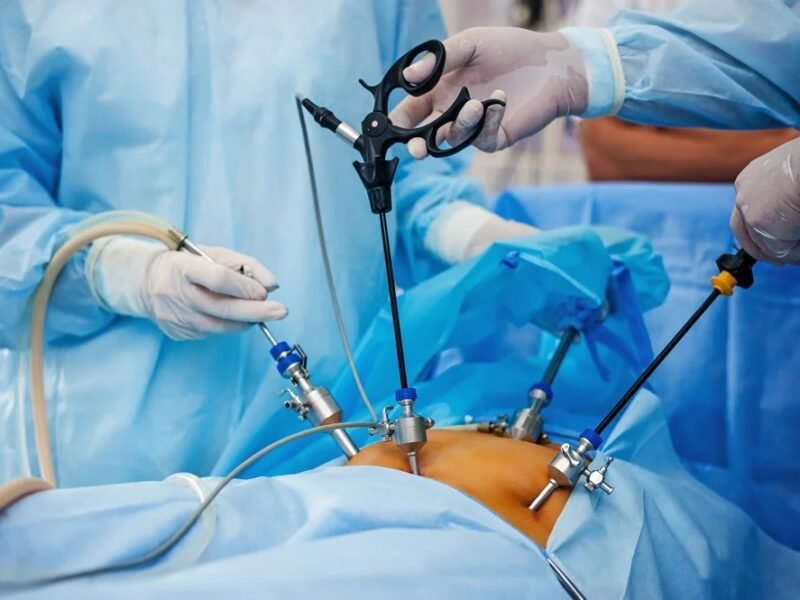
Laparoscopy Surgery
Laparoscopy Surgery is an advanced, minimally invasive surgical procedure performed using a small camera (laparoscope) and specialized instruments through tiny incisions. This modern technique allows surgeons to diagnose and treat various abdominal and pelvic conditions with precision, minimal pain, and faster recovery compared to traditional open surgery.
What is Laparoscopy Surgery?
Laparoscopy is a modern surgical technique used to diagnose and treat problems inside the abdomen and pelvis through very small incisions. A thin tube with a high-resolution camera, called a laparoscope, is inserted through a small cut, allowing the surgeon to view internal organs clearly on a monitor and perform the procedure with precision.
Unlike traditional open surgery, laparoscopic surgery requires smaller cuts, which means less pain, minimal blood loss, reduced risk of infection, and faster recovery. Patients undergoing Laparoscopy Surgery in Ahmedabad often experience shorter hospital stays and can return to their normal routine much earlier.
This advanced technique is commonly used for gallbladder removal, appendix surgery, hernia repair, gynecological conditions, and certain intestinal procedures. With expert care from the Best Laparoscopic Surgeon in Ahmedabad, patients benefit from safe, effective, and minimally invasive treatment with improved outcomes.
Laparoscopic surgery represents a significant advancement in surgical care, offering comfort, precision, and quicker healing for a wide range of abdominal conditions.
Conditions Treated with Laparoscopy
aparoscopic surgery is widely used to treat various abdominal and pelvic conditions with minimal pain and faster recovery. Below are the commonly treated conditions with brief details:
Gallbladder Removal (Gallstones)
Laparoscopic cholecystectomy is performed to remove the gallbladder when stones cause severe pain, infection, or digestive problems.Appendix Removal (Appendicitis)
In cases of acute appendicitis, laparoscopic appendectomy helps remove the infected appendix quickly with smaller incisions and faster healing.Hernia Repair
Laparoscopy is used to repair inguinal, umbilical, or incisional hernias by placing a mesh through small cuts, reducing recurrence and recovery time.Gynecological Conditions (Ovarian Cysts, Fibroids)
It is commonly used to remove ovarian cysts, treat fibroids, manage endometriosis, and diagnose infertility-related issues with minimal surgical trauma.Diagnostic Evaluation of Abdominal Pain
When the cause of chronic or unexplained abdominal pain is unclear, laparoscopy helps doctors directly examine internal organs for accurate diagnosis.Intestinal Surgeries
Certain small and large intestine conditions, including obstruction or inflammatory diseases, can be treated using laparoscopic techniques.Cancer-Related Procedures
In selected cases, laparoscopy is used for biopsy, staging, or removal of early-stage abdominal cancers with better precision and reduced complications.
Benefits of Laparoscopic Surgery
Smaller Incisions
Only small cuts (0.5–1 cm) are made, which reduces tissue damage and improves cosmetic results.Less Pain After Surgery
Since the procedure is minimally invasive, patients experience significantly less post-operative pain and discomfort.Minimal Blood Loss
Smaller incisions and precise surgical techniques help reduce bleeding during the procedure.Reduced Risk of Infection
Limited exposure of internal organs lowers the chances of surgical site infections.Shorter Hospital Stay
Most patients are discharged within 1–2 days, depending on the type of surgery performed.Faster Recovery
Patients can return to daily activities and work much sooner compared to open surgery.Minimal Scarring
Tiny incisions result in very small scars, offering better cosmetic outcome
Procedure Overview
Small incisions (0.5–1 cm) are made in the abdomen.
Carbon dioxide gas is used to gently inflate the abdomen for better visibility.
A laparoscope is inserted to visualize internal organs.
Specialized surgical instruments are used to perform the required procedure.
Incisions are closed with stitches or surgical glue.
The surgery is performed under general anesthesia.
Recovery After Laparoscopy
Most patients recover quickly and can return to normal activities within a few days to a week, depending on the type of procedure performed. Mild discomfort, bloating, or shoulder pain may occur temporarily but usually resolves quickly.
Why Choose Laparoscopic Surgery?
Laparoscopy is a modern surgical technique that offers safer treatment with faster recovery compared to traditional open surgery. Many patients prefer Laparoscopic Surgery in Ahmedabad because it involves small incisions, less pain, minimal blood loss, and reduced risk of infection.
With shorter hospital stays and quicker return to daily activities, this advanced procedure ensures greater comfort and better cosmetic results. Suitable for gallbladder, appendix, hernia, and various abdominal conditions, laparoscopic surgery provides effective and precise treatment with improved patient outcomes.